Episodes
Presentation (Venezuelan Series)
March 4, 1974
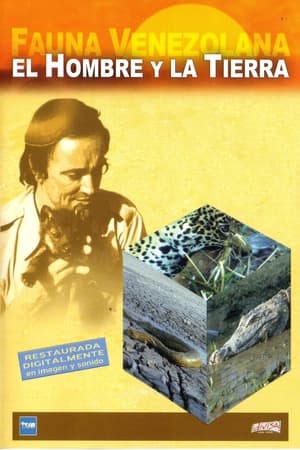
During the spring of 1973, a TVE crew, in close collaboration with several Venezuelan government agencies, produced a series of 18 ecological documentaries under the general title of Man and the Earth.
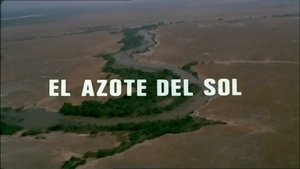
The Scourge of the Sun
March 11, 1974
The show's crew undertakes a rescue operation for the animals most affected by the heat and drought.
Operation Anaconda
March 18, 1974
During a rescue operation, the crew captures gigantic anacondas, caimans, and tortoises to prevent them from dying of dehydration.
The Capybara Roundup
March 25, 1974
The animals most affected by the tremendous drought plaguing the plains of Venezuela are the chigüires, or capybaras, rodents weighing up to 50 kilograms. Capybaras are part of a relict population that must have been extremely prosperous in South America before the uplift of the Isthmus of Panama allowed modern mammals to enter the isolated sanctuary of South American wildlife. The Man and the Earth crew conducts a study on the zoogeographical history, as well as the ecology and behavior of these fascinating rodents.
The Venezuelan Virgin Jungle
April 10, 1974
The largest forest mass on our planet spans the immense Orinoco–Amazon basin. Under a perpetually humid climate, the giants of the jungle grow to heights exceeding 60 meters.
The Yanomami, a People of the Jungle
April 17, 1974
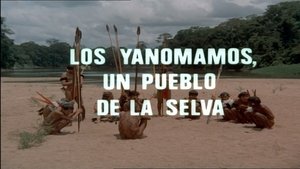
In the deciduous jungles lining the banks of the Upper Orinoco and its tributaries lives a Paleo-Indian tribe that has only very recently come into contact with civilization: the Yanomami, one of the few truly free peoples remaining in the world today.
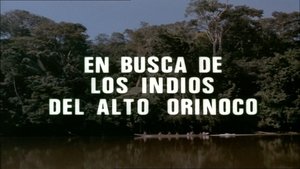
In Search of the Indians of the Upper Orinoco
May 18, 1974
Félix Rodríguez de la Fuente and his crew navigate the Orinoco, where they encounter the Yanomami. A people of the Venezuelan jungle who, despite having no knowledge of mathematical laws, build perfect bridges based on their thorough understanding of every type of wood in the jungle. A people of the forest who avoided the great rivers because, according to their traditions, that was where the great dangers lay. An adventure on the banks of the Orinoco River.
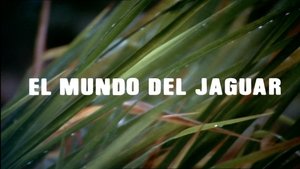
The World of the Jaguar
May 25, 1974
The largest and most powerful of South American carnivores is the jaguar. Once abundant, the Man and the Earth crew had to travel thousands of kilometers deep into the jungle to discover the last strongholds of this great predator.
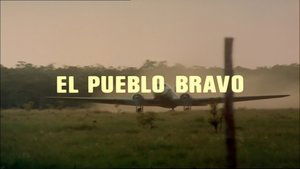
The Fierce People
June 8, 1974
One of the most distinctive traits of the Yanomami is their warlike behavior.
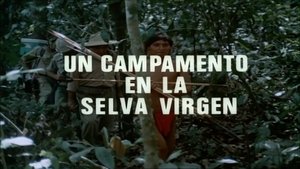
A Camp in the Virgin Jungle
June 11, 1974
After spending a season with the Yanomami, the Man and the Earth crew is guided by some of these indigenous people deeper into the jungle, where the native hunters make camp during their summer nomadic wanderings.
The Giant Otter
June 16, 1974
The giant otter, or water dog as it is known in South America, is one of the most beautiful, fascinating, and little-known animals in the world.
The Sacred Mountain
June 22, 1974
South of Puerto Ayacucho, the vertical and inviolate mass of Cerro Autana rises, the sacred mountain of the Piaroa people.
The Plains of Venezuela
July 6, 1974
The Man and the Earth crew shows us the Llanos of Venezuela, one of the largest and least known regions on the planet.
The Paradise of the Birds
July 13, 1974
South America is a paradise for birds, known by scientists as the "continent of birds." The Republic of Venezuela alone is home to more bird species than the entire European continent.
The World of Coral
July 20, 1974
The Man and the Earth crew, joined on this occasion by underwater and surface filmmakers, captures on camera an entire world of coral that forms the subject of this episode.
The Island of the Gannets
July 30, 1974
On a flat islet covered with glasswort, in the middle of the Venezuelan Coral Sea, brown boobies nest. The reproductive biology of this immense colony is the subject of this episode of Man and the Earth. For a European, explains Félix Rodríguez de la Fuente, "someone accustomed to animals fearing his presence, the most surprising thing is the calm with which these boobies welcome these new 'animals.'"
My Friend the Otter
July 5, 1974
At the small river port of La Esmeralda, the Man and the Earth crew finds a six-month-old giant otter that had been literally torn from the belly of its dead mother and was being raised by a native to be sold at one year of age to fur buyers.
The Lost Eden
August 12, 1974
Dr. Rodríguez de la Fuente concludes the expedition across Venezuela and returns to Spain with the giant otter rescued from death in Puerto Ayacucho (La Esmeralda). They are accompanied by another otter, a sibling of the first, also rescued from death.
